JEE MainChemistryHaloalkanes and HaloarenesMCQ+4 / −1
Consider the following reactions : 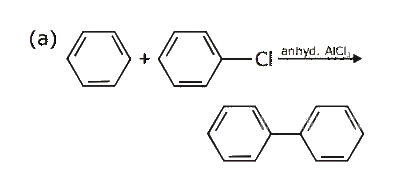
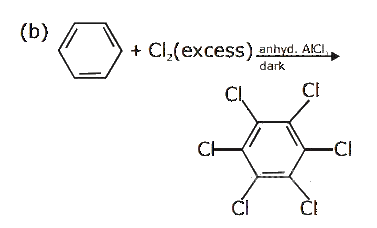
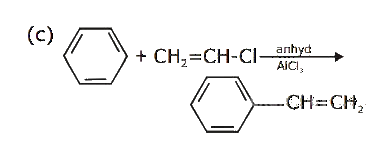
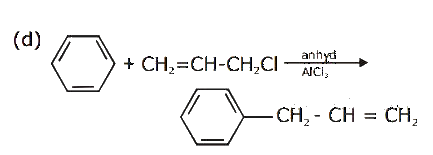 Which of these reactions are possible ?
Which of these reactions are possible ?- A(b), (c) and (d)
- B(a) and (b)
- C(a) and (d)
- D(b) and (d)
More from Haloalkanes and Haloarenes
- The decreasing order of reactivity towards dehydrohalogenation (E1) reaction of the following compounds is : Includes diagram2020 · MCQ
- Which of these will produce the highest yield in Friedel Crafts reaction?2020 · MCQ
- Which of the following reactions will not produce a racemic product?2020 · MCQ
- The major product of the following reaction is: Includes diagram2019 · MCQ
- Which one of the following alkenes when treated with HCl yields majorly an anti Markovnikov product?2019 · MCQ
- The major product in the following reaction is : Includes diagram2019 · MCQ
- The major product of the following reaction is : Includes diagram2019 · MCQ
- The compounds A and B in the following reaction are, respectively : Includes diagram2019 · MCQ