Sign in
12thPass logo
New chatPYQ LibraryDoubtsRank report
Sign in to see Recents

Your guest activity stays on this device

Sign in to save progress →
Sign in

Haloalkanes and Haloarenes question

2020 · 7 Jan · Shift 1 · Q16
Guest · filters and generic practice availableBrowsing as a guest · PYQ filters and generic practice are available. Sign in only for personalised features and saved progress.
  1. PYQ Library
  2. /JEE Main
  3. /Chemistry
  4. /Haloalkanes and Haloarenes
  5. /2020 · 7 Jan · Shift 1 · Q16

Haloalkanes and Haloarenes question

2020 · 7 Jan · Shift 1 · Q16

JEE MainChemistryHaloalkanes and HaloarenesMCQ+4 / −1
1- methyl ethylene oxide when treated with an excess of HBr produces :
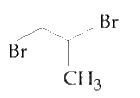
  1. A
    JEE Main 2020 (Online) 7th January Morning Slot Chemistry - Haloalkanes and Haloarenes Question 124 English Option 1
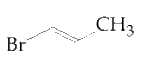
  2. B
    JEE Main 2020 (Online) 7th January Morning Slot Chemistry - Haloalkanes and Haloarenes Question 124 English Option 2
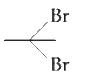
  3. C
    JEE Main 2020 (Online) 7th January Morning Slot Chemistry - Haloalkanes and Haloarenes Question 124 English Option 3
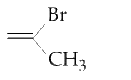
  4. D
    JEE Main 2020 (Online) 7th January Morning Slot Chemistry - Haloalkanes and Haloarenes Question 124 English Option 4
View written solutionFree

Correct answer: A

  1. Identify the compound

    1-methyl ethylene oxide is the epoxide propylene oxide (also called 1,2-epoxypropane): \ceCH3−CH−CH2\ce{CH3-CH-CH2}\ceCH3−CH−CH2 with an oxygen bridging the last two carbons.

  2. Reaction of epoxide with HBr

    Epoxides react with hydrogen halides by:

    • protonation of the oxygen,
    • followed by ring opening by bromide ion.

    First, one mole of HBr opens the epoxide ring to give a bromo alcohol.

    For propylene oxide, the product is: \ceCH3−CH(OH)−CH2Br\ce{CH3-CH(OH)-CH2Br}\ceCH3−CH(OH)−CH2Br or equivalently under acidic conditions, ring opening gives the bromohydrin.

  3. Effect of excess HBr

    Since HBr is in excess, the alcohol group is further replaced by bromine.

    Thus: \ceCH3−CH(OH)−CH2Br+HBr−>CH3−CHBr−CH2Br+H2O\ce{CH3-CH(OH)-CH2Br + HBr -> CH3-CHBr-CH2Br + H2O}\ceCH3−CH(OH)−CH2Br+HBr−>CH3−CHBr−CH2Br+H2O

  4. Final product

    Therefore, the final product is: \ceCH3−CHBr−CH2Br\ce{CH3-CHBr-CH2Br}\ceCH3−CHBr−CH2Br

    This is 1,2-dibromopropane.

  5. Conclusion

    So, 1-methyl ethylene oxide with excess HBr gives 1,2-dibromopropane.

  6. Comparison with stored answer

    The stored correct answer is A. Since the option texts are not visible, I infer that A corresponds to 1,2-dibromopropane.

    Hence, I agree with the stored answer provided option A is 1,2-dibromopropane.

PreviousNext

More from Haloalkanes and Haloarenes

  • For the following reactions Ks and Ke, are respectively, the rate constants for substitution and elimination and μ=ke​ks​​ the correct options is Includes diagram2020 · MCQ
  • Consider the following reactions : Which of these reactions are possible ? Includes diagram2020 · MCQ
  • The decreasing order of reactivity towards dehydrohalogenation (E1) reaction of the following compounds is : Includes diagram2020 · MCQ
  • Which of these will produce the highest yield in Friedel Crafts reaction?2020 · MCQ
  • Which of the following reactions will not produce a racemic product?2020 · MCQ
  • The major product of the following reaction is: Includes diagram2019 · MCQ
  • Which one of the following alkenes when treated with HCl yields majorly an anti Markovnikov product?2019 · MCQ
  • The major product in the following reaction is : Includes diagram2019 · MCQ