JEE MainChemistryChemical Bonding and Molecular StructureMCQ+4 / −1
Which of the following best describes the diagram below of a molecular orbital ? 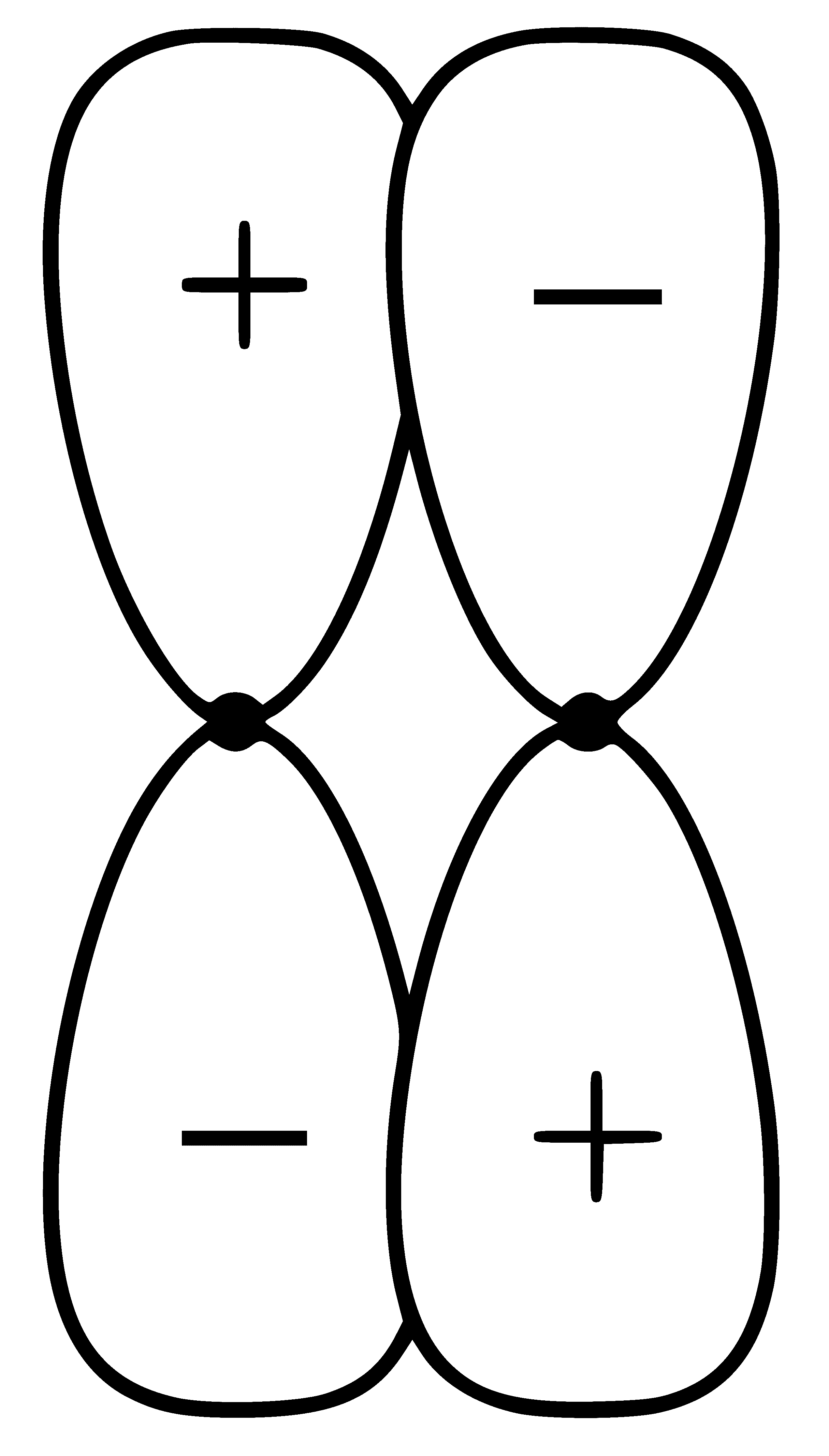
- AA non-bonding orbital
- BAn antibonding orbital
- CA bonding orbital
- DAn antibonding orbital
View written solutionFree
Correct answer: D
-
Identify the key features of the molecular orbital diagram
To classify a molecular orbital, we look for:
- whether the overlap is head-on or sidewise
- whether there is electron density between the nuclei
- whether there is a node between the nuclei
-
Distinguish between and orbitals
- A orbital is formed by head-on overlap along the internuclear axis.
- A orbital is formed by sidewise overlap of orbitals, with electron density above and below the internuclear axis.
Since the diagram is of a molecular orbital with sidewise character, it must be a -type orbital, not a orbital.
-
Distinguish between bonding and antibonding
- In a bonding orbital, electron density is concentrated between the two nuclei.
- In an antibonding orbital, there is a node between the nuclei, so electron density is absent from the internuclear region.
The diagram indicates destructive overlap with a node between the nuclei, so it is antibonding.
-
Combine both observations
- Type of overlap:
- Nature: antibonding
Therefore, the orbital is an antibonding orbital, written as .
-
Check options
- A: A non-bonding orbital Incorrect
- B: An antibonding orbital Incorrect
- C: A bonding orbital Incorrect
- D: An antibonding orbital Correct
Hence, the correct answer is D.
More from Chemical Bonding and Molecular Structure
- The incorrect geometry is represented by :2018 · MCQ
- Which of the following conversions involves change in both shape and hybridisation ?2018 · MCQ
- Which of the following compounds contain(s) no covalent bond(s)? , , , , 2018 · MCQ
- Total number of lone pair of electrons in ion is2018 · MCQ
- According to molecular orbital theory, which of the following will not be a viable molecule?2018 · MCQ
- sp3d2 hybridization is not displayed by :2017 · MCQ
- Which of the following is paramagnetic ?2017 · MCQ
- The group having triangular planar structures is :2017 · MCQ