Sign in
12thPass logo
New chatPYQ LibraryDoubtsRank report
Sign in to see Recents

Your guest activity stays on this device

Sign in to save progress →
Sign in

Vector Algebra question

2021 · 27 Jul · Shift 1 · Q58
Guest · filters and generic practice availableBrowsing as a guest · PYQ filters and generic practice are available. Sign in only for personalised features and saved progress.
  1. PYQ Library
  2. /JEE Main
  3. /Physics
  4. /Vector Algebra
  5. /2021 · 27 Jul · Shift 1 · Q58

Vector Algebra question

2021 · 27 Jul · Shift 1 · Q58

JEE MainPhysicsVector AlgebraMCQ+4 / −1
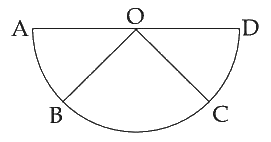
Assertion A : If A, B, C, D are four points on a semi-circular are with centre at 'O' such that ∣AB→∣=∣BC→∣=∣CD→∣\left| {\overrightarrow {AB} } \right| = \left| {\overrightarrow {BC} } \right| = \left| {\overrightarrow {CD} } \right|​AB​=​BC​=​CD​, then AB→+AC→+AD→=4AO→+OB→+OC→\overrightarrow {AB} + \overrightarrow {AC} + \overrightarrow {AD} = 4\overrightarrow {AO} + \overrightarrow {OB} + \overrightarrow {OC}AB+AC+AD=4AO+OB+OC Reason R : Polygon law of vector addition yields AB→+BC→+CD→+AD→=2AO→\overrightarrow {AB} + \overrightarrow {BC} + \overrightarrow {CD} + \overrightarrow {AD} = 2\overrightarrow {AO}AB+BC+CD+AD=2AO JEE Main 2021 (Online) 27th July Morning Shift Physics - Vector Algebra Question 24 English In the light of the above statements, choose the most appropriate answer from the options given below :
  1. A
    A is correct but R is not correct.
  2. B
    A is not correct but R is correct.
  3. C
    Both A and R are correct and R is the correct explanation of A.
  4. D
    Both A and R are correct but R is not the correct explanation of A.
View written solutionFree

Correct answer: A

  1. Interpret the assertion

We need to check whether AB⃗+AC⃗+AD⃗=4AO⃗+OB⃗+OC⃗\vec{AB}+\vec{AC}+\vec{AD}=4\vec{AO}+\vec{OB}+\vec{OC}AB+AC+AD=4AO+OB+OC is true.

Using position-vector type decomposition: AB⃗=AO⃗+OB⃗\vec{AB}=\vec{AO}+\vec{OB}AB=AO+OB AC⃗=AO⃗+OC⃗\vec{AC}=\vec{AO}+\vec{OC}AC=AO+OC AD⃗=AO⃗+OD⃗\vec{AD}=\vec{AO}+\vec{OD}AD=AO+OD Hence,

=3\vec{AO}+\vec{OB}+\vec{OC}+\vec{OD}$$ So the assertion will be true if $$3\vec{AO}+\vec{OB}+\vec{OC}+\vec{OD}=4\vec{AO}+\vec{OB}+\vec{OC}$$ which requires $$\vec{OD}=\vec{AO}$$ Now, since $A,B,C,D$ are four points equally spaced on a semicircular arc, the arc is divided into 3 equal parts, so the central angle between consecutive points is $$\frac{180^\circ}{3}=60^\circ$$ Thus the points are at angles $180^\circ,120^\circ,60^\circ,0^\circ$ (for a suitable orientation), so $A$ and $D$ are endpoints of the diameter. Therefore $$\vec{OD}=-\vec{OA}=\vec{AO}$$ Hence the assertion is **correct**. --- 2. **Check the reason** The reason states: $$\vec{AB}+\vec{BC}+\vec{CD}+\vec{AD}=2\vec{AO}$$ Now, $$\vec{AB}+\vec{BC}+\vec{CD}=\vec{AD}$$ by polygon law. Therefore, $$\vec{AB}+\vec{BC}+\vec{CD}+\vec{AD}=2\vec{AD}$$ Since $A$ and $D$ are endpoints of a diameter and $O$ is the midpoint, $$\vec{AD}=2\vec{AO}$$ Therefore, $$2\vec{AD}=4\vec{AO}$$ not $2\vec{AO}$. So the stated reason is **incorrect**. --- 3. **Conclusion** - Assertion A is correct. - Reason R is not correct. Therefore the correct option is: $$\boxed{A}$$ --- 4. **Comparison with stored answer** Stored correct answer: $D$ My derived answer is $A$. They do **not** match. The likely error in the stored answer is in the Reason statement: $$\vec{AB}+\vec{BC}+\vec{CD}+\vec{AD}=\vec{AD}+\vec{AD}=2\vec{AD}=4\vec{AO}$$ not $2\vec{AO}$. So Reason is false, and option $D$ cannot be correct.
PreviousNext

More from Vector Algebra

  • Statement I : Two forces (P+Q​) and (P−Q​) where P⊥Q​, when act at an angle θ 1 to each…2021 · MCQ
  • The sum of two forces P and Q​ is R such that ​R​=​P​. The angle θ (in degrees) that the resultant of 2 P…2020 · Numerical
  • Let ​A1​→​​=3, ​A2​→​​=5 and ​A1​→​+A2​→​​=5. The value of (2A1​→​+3A2​→​)(3A1​→​−2A2​→​)…2019 · MCQ
  • In the cube of side ‘a’ shown in the figure, the vector from the central point of the face ABOD to the central point of the face BEFO will be - Includes diagram2019 · MCQ
  • Two vectors A and B have equal magnitudes. The magnitude of (A+B) is 'n' times the magnitude of (A−B)…2019 · MCQ
  • Let A=(i+j​) and, B=(2i−j​). The magnitude of a coplanar vector C such that A.C=B.C=A.B,…2018 · MCQ
  • If A×B=B×A, then the angle beetween A and B is2004 · MCQ
  • Two particles are located at equal distance from origin. The position vectors of those are represented by A=2i^+3nj^​+2k^ and Bˉ=2i^−2j^​+4pk^, respectively. If both the vectors are at…2025 · Numerical