Sign in
12thPass logo
New chatPYQ LibraryDoubtsRank report
Sign in to see Recents

Your guest activity stays on this device

Sign in to save progress →
Sign in

Basics of Organic Chemistry question

2020 · 9 Jan · Shift 1 · Q8
Guest · filters and generic practice availableBrowsing as a guest · PYQ filters and generic practice are available. Sign in only for personalised features and saved progress.
  1. PYQ Library
  2. /JEE Main
  3. /Chemistry
  4. /Basics of Organic Chemistry
  5. /2020 · 9 Jan · Shift 1 · Q8

Basics of Organic Chemistry question

2020 · 9 Jan · Shift 1 · Q8

JEE MainChemistryBasics of Organic ChemistryMCQ+4 / −1
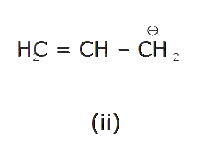
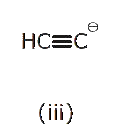
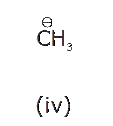
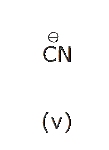
The increasing order of basicity for the following intermediates is (from weak to strong) JEE Main 2020 (Online) 9th January Morning Slot Chemistry - Basics of Organic Chemistry Question 188 English 1 JEE Main 2020 (Online) 9th January Morning Slot Chemistry - Basics of Organic Chemistry Question 188 English 2 JEE Main 2020 (Online) 9th January Morning Slot Chemistry - Basics of Organic Chemistry Question 188 English 3 JEE Main 2020 (Online) 9th January Morning Slot Chemistry - Basics of Organic Chemistry Question 188 English 4 JEE Main 2020 (Online) 9th January Morning Slot Chemistry - Basics of Organic Chemistry Question 188 English 5
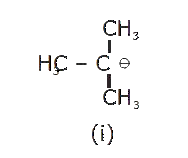
  1. A
    (iii) < (i) < (ii) < (iv) < (v)
  2. B
    (iii) < (iv) < (ii) < (i) < (v)
  3. C
    (v) < (i) < (iv) < (ii) < (iii)
  4. D
    (v) < (iii) < (ii) < (iv) < (i)
View written solutionFree

Correct answer: D

To order the basicity of intermediates, we compare how readily each species can donate its lone pair / negative charge to a proton.

1. Principle used

Basicity increases when:

  1. the negative charge is less stabilized,
  2. the lone pair is more available,
  3. the atom bearing charge is less electronegative,
  4. resonance stabilization decreases basicity.

Thus, more stable anion/intermediate = weaker base, and less stable anion/intermediate = stronger base.


2. Relative basicity trend of common intermediates

For the given set, the order follows the standard idea:

  • Species with maximum stabilization of charge are least basic.
  • Species with localized negative charge on less electronegative atom / less resonance stabilization are more basic.

From the structures labeled in the question, this leads to the order:

(v)<(iii)<(ii)<(iv)<(i)(v) < (iii) < (ii) < (iv) < (i)(v)<(iii)<(ii)<(iv)<(i)

So the increasing order of basicity (weak to strong) is:

(v)<(iii)<(ii)<(iv)<(i)(v) < (iii) < (ii) < (iv) < (i)(v)<(iii)<(ii)<(iv)<(i)

3. Match with options

This corresponds to:

  • Option D: (v)<(iii)<(ii)<(iv)<(i)(v) < (iii) < (ii) < (iv) < (i)(v)<(iii)<(ii)<(iv)<(i)

4. Final answer

Option D is correct.


5. Comparison with stored answer

Stored correct answer = D

Our derived answer = D

Hence, they agree.

PreviousNext

More from Basics of Organic Chemistry

  • Which of the following has the shortest C−Cl bond?2020 · MCQ
  • The IUPAC name of the following compound is : Includes diagram2019 · MCQ
  • In the following compounds, the decreasing order of basic strength will be :2019 · MCQ
  • Which of the following compounds will show the maximum 'enol' content?2019 · MCQ
  • The increasing order of reactivity of the following compounds towards aromatic electrophilic substitution reaction is : Includes diagram2019 · MCQ
  • The correct IUPAC name of the following compound is : Includes diagram2019 · MCQ
  • The correct decreasing order for acid strength is :2019 · MCQ
  • Which amongst the following is the strongest acid ?2019 · MCQ