Sign in
12thPass logo
New chatPYQ LibraryDoubtsRank report
Sign in to see Recents

Your guest activity stays on this device

Sign in to save progress →
Sign in

Haloalkanes and Haloarenes question

2024 · 27 Jan · Shift 2 · Q11
Guest · filters and generic practice availableBrowsing as a guest · PYQ filters and generic practice are available. Sign in only for personalised features and saved progress.
  1. PYQ Library
  2. /JEE Main
  3. /Chemistry
  4. /Haloalkanes and Haloarenes
  5. /2024 · 27 Jan · Shift 2 · Q11

Haloalkanes and Haloarenes question

2024 · 27 Jan · Shift 2 · Q11

JEE MainChemistryHaloalkanes and HaloarenesMCQ+4 / −1
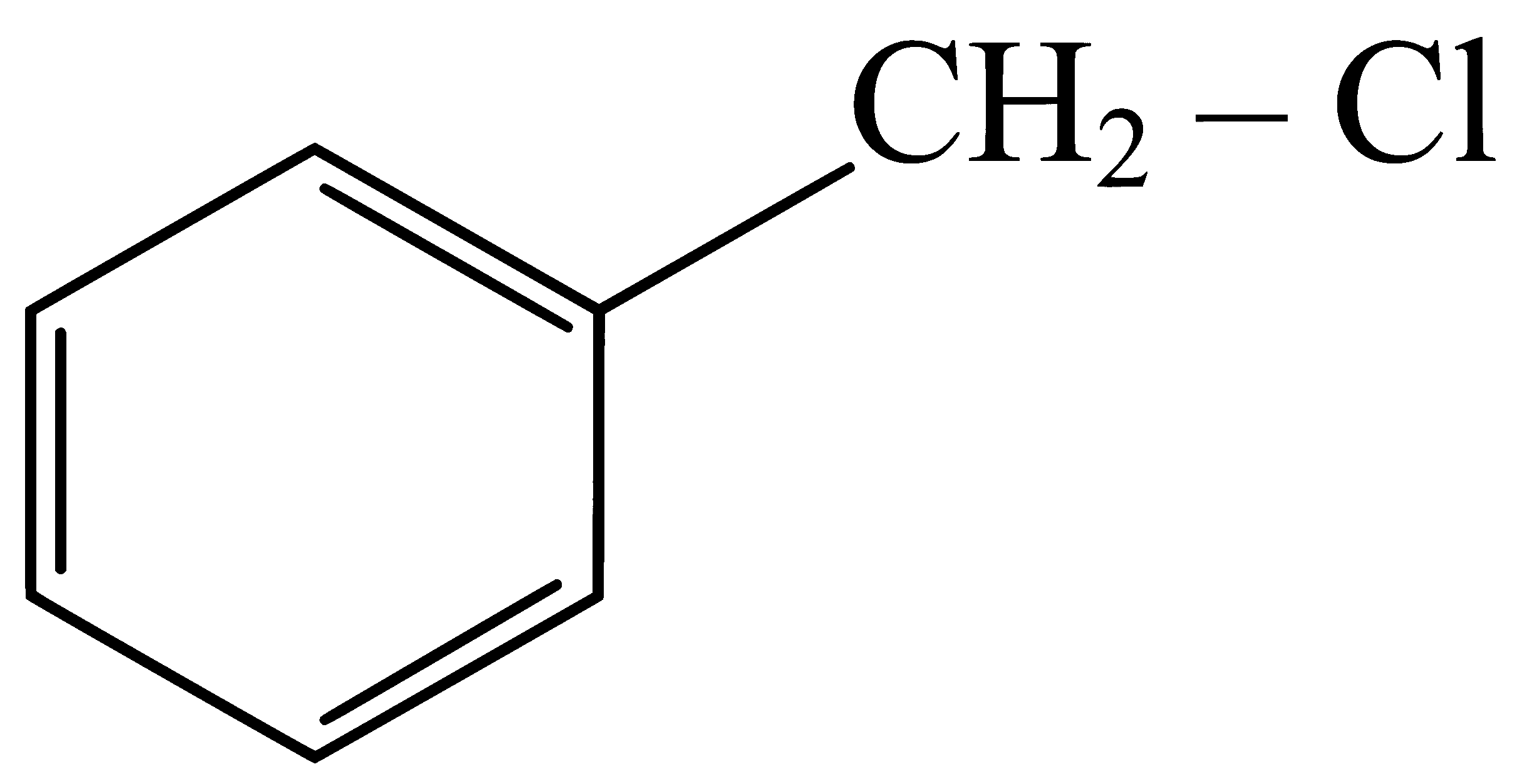
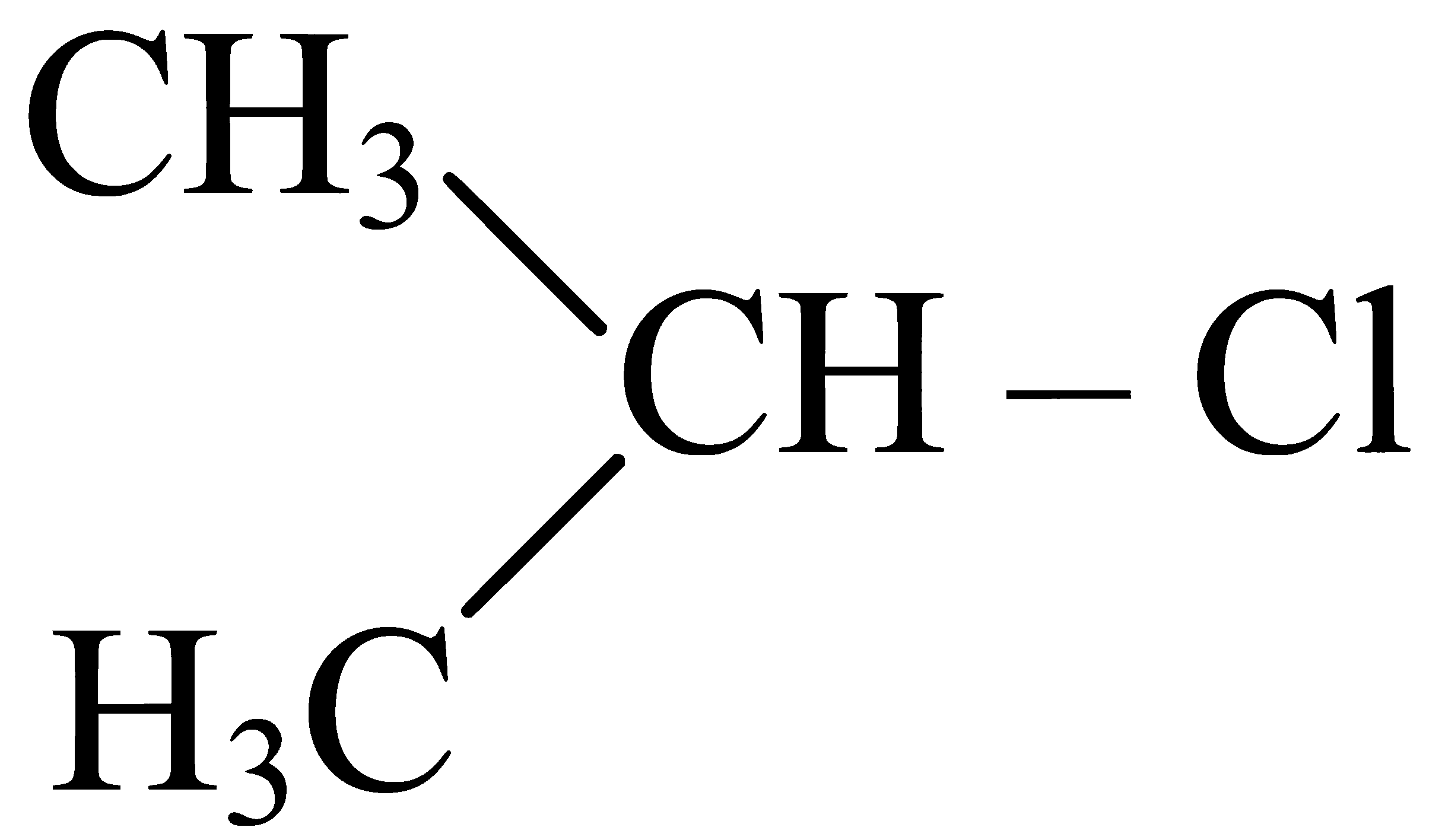
Which among the following halide/s will not show SN1\mathrm{S_N 1}SN​1 reaction: (A) H2C=CH−CH2Cl\mathrm{H}_2 \mathrm{C}=\mathrm{CH}-\mathrm{CH}_2 \mathrm{Cl}H2​C=CH−CH2​Cl(B) CH3−CH=CH−Cl\mathrm{CH}_3-\mathrm{CH}=\mathrm{CH}-\mathrm{Cl}CH3​−CH=CH−Cl (C) JEE Main 2024 (Online) 27th January Evening Shift Chemistry - Haloalkanes and Haloarenes Question 42 English 1 (D) JEE Main 2024 (Online) 27th January Evening Shift Chemistry - Haloalkanes and Haloarenes Question 42 English 2 Choose the most appropriate answer from the options given below :
  1. A
    (B) and (C) only
  2. B
    (A), (B) and (D) only
  3. C
    (B) only
  4. D
    (A) and (B) only
View written solutionFree

Correct answer: C

  1. Principle for SN1S_N1SN​1 reaction

    An SN1S_N1SN​1 reaction proceeds through formation of a carbocation in the rate-determining step. So, a halide will show SN1S_N1SN​1 only if loss of halide ion can generate a reasonably stable carbocation.

  2. Examine option (A)

    H2C=CH−CH2Cl\mathrm{H_2C=CH-CH_2Cl}H2​C=CH−CH2​Cl

    This is allyl chloride. On ionization, it forms an allylic carbocation:

    H2C=CH−CH2+↔+CH2−CH=CH2\mathrm{H_2C=CH-CH_2^+} \leftrightarrow \mathrm{^+CH_2-CH=CH_2}H2​C=CH−CH2+​↔+CH2​−CH=CH2​

    This carbocation is resonance stabilized, so (A) can undergo SN1S_N1SN​1.

  3. Examine option (B)

    CH3−CH=CH−Cl\mathrm{CH_3-CH=CH-Cl}CH3​−CH=CH−Cl

    Here chlorine is attached directly to a double-bonded carbon; this is a vinylic halide.

    If Cl−Cl^-Cl− leaves, the carbocation formed would be a vinyl carbocation, which is highly unstable:

    CH3−CH=CH+\mathrm{CH_3-CH=CH^+}CH3​−CH=CH+

    Therefore, vinylic halides do not undergo SN1S_N1SN​1 reaction.

  4. Conclusion from given answer choices

    Since (A) shows SN1S_N1SN​1 and (B) does not, the only option consistent with this is:

    (B) only\boxed{\text{(B) only}}(B) only​

    which corresponds to Option C.

  5. Comparison with stored correct answer

    Stored correct answer = C

    Derived answer = C

    Hence, they agree.

PreviousNext

More from Haloalkanes and Haloarenes

  • Identify B formed in the reaction. Cl−(CH2​)4​−Cl excess NH3​​ ANaOH​B+H2​O+NaCl2024 · MCQ
  • Given below are two statements : one is labelled as Assertion A and the other is labelled as Reason R : Assertion A : Aryl halides cannot be prepared by replacement of hydroxyl group of phenol by halogen atom. Reason R : Phenols react with…2024 · MCQ
  • Alkyl halide is converted into alkyl isocyanide by reaction with2024 · MCQ
  • Given below are two statements : one is labelled as Assertion (A) and the other is labelled as Reason (R). Assertion (A) : CH2​=CH−CH2​−Cl is an example of allyl halide. Reason (R) : Allyl halides…2024 · MCQ
  • Example of vinylic halide is :2024 · MCQ
  • The final product A, formed in the following multistep reaction sequence is : Includes diagram2024 · MCQ
  • Given below are two statements: Statement - I: High concentration of strong nucleophilic reagent with secondary alkyl halides which do not have bulky substituents will follow SN​2 mechanism. Statement - II: A…2024 · MCQ
  • 2-chlorobutane +Cl2​→C4​H8​Cl2​(isomers) Total number of optically active isomers shown by C4​H8​Cl2​, obtained in the above reaction is ​…2024 · Numerical