JEE MainChemistryHaloalkanes and HaloarenesMCQ+4 / −1
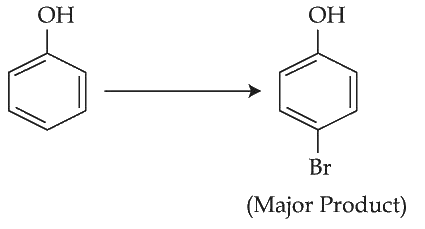 The given reaction can occur in the presence of : (a) Bromine water (b) in , 273 K (c) / (d) in , 273 K Choose the correct answer from the options gien below :
- A(b) and (d) only
- B(a) and (c) only
- C(b), (c) and (d) only
- D(a), (b) and (d) only
More from Haloalkanes and Haloarenes
- Excess of isobutane on reaction with in presence of light at 125 C gives which one of the following, as the major product?2021 · MCQ
- The major product formed in the following reaction is : Includes diagram2021 · MCQ
- Among the following compounds I-IV, which one forms a yellow precipitate on reacting sequentially with (i) (ii) dil. (iii) ? Includes diagram2021 · MCQ
- Consider the given reaction, the product A is : Includes diagram2021 · MCQ
- A chloro compound "A". (i) forms aldehydes on ozonolysis followed by the hydrolysis. (ii) when vaporized completely 1.53 g of A, gives 448 mL of vapour at STP. The number of carbon atoms in a molecule of compound A is …2021 · Numerical
- For the given reaction What is 'A'? Includes diagram2021 · MCQ
- For the given reaction : What is 'A'? Includes diagram2021 · MCQ
- Match List - I with List - II. Choose the correct answer from the options given below : Includes diagram2021 · MCQ