Sign in
12thPass logo
New chatPYQ LibraryDoubtsRank report
Sign in to see Recents

Your guest activity stays on this device

Sign in to save progress →
Sign in

Haloalkanes and Haloarenes question

2023 · 11 Apr · Shift 1 · Q1
Guest · filters and generic practice availableBrowsing as a guest · PYQ filters and generic practice are available. Sign in only for personalised features and saved progress.
  1. PYQ Library
  2. /JEE Main
  3. /Chemistry
  4. /Haloalkanes and Haloarenes
  5. /2023 · 11 Apr · Shift 1 · Q1

Haloalkanes and Haloarenes question

2023 · 11 Apr · Shift 1 · Q1

JEE MainChemistryHaloalkanes and HaloarenesMCQ+4 / −1
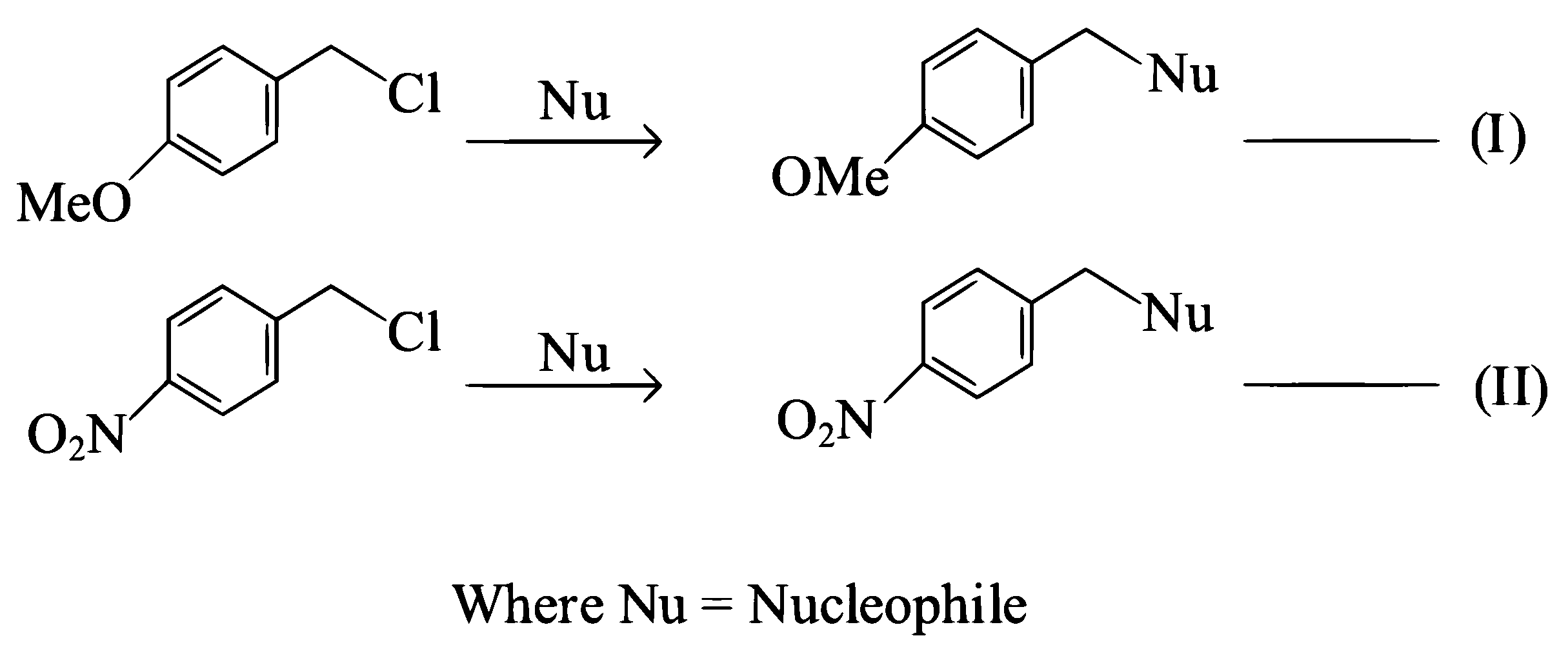
JEE Main 2023 (Online) 11th April Morning Shift Chemistry - Haloalkanes and Haloarenes Question 51 English Find out the correct statement from the options given below for the above 2 reactions.
  1. A
    Reaction (I) is of 1st 1^{\text {st }}1st  order and reaction (II) is of 2nd 2^{\text {nd }}2nd  order
  2. B
    Reaction (I) is of 2nd 2^{\text {nd }}2nd  order and reaction (II) is of 1st 1^{\text {st }}1st  order
  3. C
    Reactions (I) and (II) both are of 2nd 2^{\text {nd }}2nd  order
  4. D
    Reactions (I) and (II) both are of 1st 1^{\text {st }}1st  order
View written solutionFree

Correct answer: A

The question asks for the order of two reactions (I) and (II), but the actual reaction schemes are not visible in the prompt. In haloalkanes/haloarenes, such questions almost always compare:

  1. an SN1S_N1SN​1 reaction → first-order kinetics, and
  2. an SN2S_N2SN​2 reaction → second-order kinetics.

So let us use the standard kinetic facts.


1. Rate law for an SN1S_N1SN​1 reaction

In an SN1S_N1SN​1 reaction, the slow step is the ionization of the substrate:

R−X⟶R++X−R-X \longrightarrow R^+ + X^-R−X⟶R++X−

Since only the concentration of the haloalkane appears in the rate-determining step,

Rate=k[R−X]\text{Rate} = k[R-X]Rate=k[R−X]

Hence, the reaction is first order.


2. Rate law for an SN2S_N2SN​2 reaction

In an SN2S_N2SN​2 reaction, the nucleophile attacks the substrate in a single concerted step:

R−X+Nu−⟶R−Nu+X−R-X + Nu^- \longrightarrow R-Nu + X^-R−X+Nu−⟶R−Nu+X−

So the rate depends on both reactants:

Rate=k[R−X][Nu−]\text{Rate} = k[R-X][Nu^-]Rate=k[R−X][Nu−]

Hence, the reaction is second order.


3. Matching with the options

Thus, if reaction (I) is the SN1S_N1SN​1 type and reaction (II) is the SN2S_N2SN​2 type, then:

  • Reaction (I): 1st order
  • Reaction (II): 2nd order

This corresponds to:

Option A\boxed{\text{Option A}}Option A​


4. Comparison with stored answer

Stored correct answer = A
Derived answer = A

So they agree.

PreviousNext

More from Haloalkanes and Haloarenes

  • Compound from the following that will not produce precipitate on reaction with AgNO3​ is :2023 · MCQ
  • In the following reaction 'X' is Includes diagram2023 · MCQ
  • The major product formed in the Friedel-Craft acylation of chlorobenzene is2023 · MCQ
  • Number of moles of AgCl formed in the following reaction is ​ Includes diagram2023 · Numerical
  • Assertion A : Hydrolysis of an alkyl chloride is a slow reaction but in the presence of NaI, the rate of the hydrolysis increases. Reason R : I − is a good nucleophile as well as a good leaving group. In the light of the above…2023 · MCQ
  • The compound which will have the lowest rate towards nucleophilic aromatic substitution on treatment with OH − is2023 · MCQ
  • The isomeric deuterated bromide with molecular formula C4​H8​DBr having two chiral carbon atoms is2023 · MCQ
  • Identify the correct order for the given property for following compounds. Choose the correct answer from the option given below : Includes diagram2023 · MCQ