- A
- B
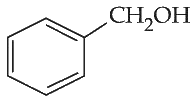
- C
- D
View written solutionFree
Correct answer: D
-
Identify the condition for resonance
Resonance is shown by compounds in which there is conjugation, i.e. adjacent atoms with:
- a bond next to another bond, or
- a lone pair next to a bond, or
- a charge next to a bond.
So we check whether each compound has such delocalization.
-
Option A:
Structure can be written as:
Here oxygen has a lone pair adjacent to the double bond:
Therefore, resonance is possible by donation of lone pair from oxygen into the adjacent system:
So A exhibits resonance.
-
Option C:
This is an amide:
In amides, the lone pair on nitrogen is conjugated with the carbonyl group:
Hence C exhibits resonance strongly.
-
Option D:
Structure:
The group is attached to a carbon, not directly to the double bond carbon.
So the arrangement is:
Because of the intervening saturated carbon, the lone pair on nitrogen is not adjacent to the double bond. Thus there is no conjugation and hence no resonance involving the given functional groups.
So D does not exhibit resonance.
-
Conclusion
The compound that does not exhibit resonance is:
-
Comparison with stored answer
Stored correct answer = D.
My derived answer = D.
Therefore, they agree.
More from Basics of Organic Chemistry
- Which of the following molecules does not show stereo isomerism?2021 · MCQ
- Which one of the following compounds is non-aromatic?2021 · MCQ
- Using the provided information in the following paper chromatogram : Fig : Paper chromatography for compounds A and B. the calculated Rf value of A 10-1. Includes diagram2021 · Numerical
- The correct order of acid character of the following compounds is : Includes diagram2021 · MCQ
- Which one among the following resonating structures is not correct?2021 · MCQ
- Which among the following is the strongest acid ?2021 · MCQ
- The correct decreasing order of densities of the following compounds is : Includes diagram2021 · MCQ
- The number of stereoisomers possible for 1, 2-dimethyl cyclopropane is :2021 · MCQ